 Nepal’s history goes back many thousands of years although recorded chronicles of it’s early evolution are few. Indian scriptures make mention of Nepal as far back as the Mahabharata, the Hindu epic, and the famous Chinese traveler Huen Tsang records his visit here in his journals. It is a recognized truth that Gautam Buddha was born in a small southern border town of Nepal.
However, the early flow of Nepali history was never chronicled until the arrival of the eastern Kiratis and of the north Indian Licchavis in the Kathmandu Valley in circa 250 AD until their decline in 879 AD. For many centuries, the Valley itself was known as Nepal, the people of the hills and mountains and other valleys never really knowing that they were citizens of one country.
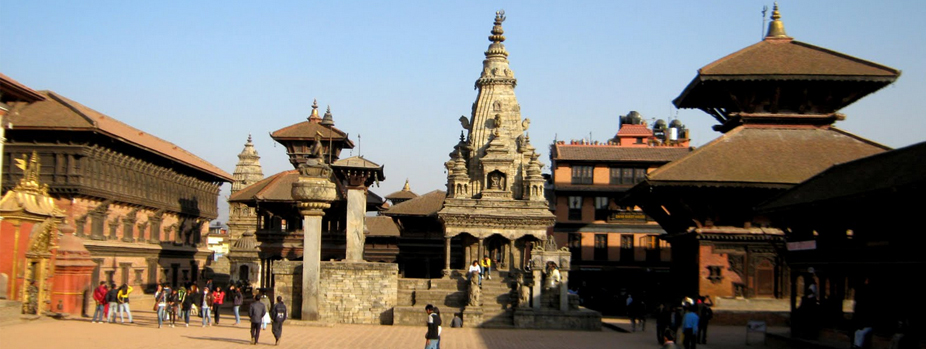
Then on till the 13th century in the Kathmandu Valley, the Malla dynasty ruled, a golden era when architecture and the Hindu religion blossomed and political, social and cultural patterns emerged and grew and flourished. This period saw the evolution of Nepal’s rich cultural heritage, the grandeur of architecture, the unchanging social structures, the beauty of Nepali music and literature that still endures to this day.
Meanwhile, long before the 18th century, outside the Valley of Kathmandu, numerous small principalities had been established: 24 (chaubise) in the west and 22 (baise) in the east. Prithvi Narayan Shah, king of one of these small states, Gorkha, managed, with the aid of his Gurkha soldiers, to overcome all the eastern and western fiefdoms. Then, after a three-year long blockade, he invaded the Kathmandu Valley’s three kingdoms of Kathmandu, Bhaktapur and Patan in 1748, and established his suzerainty. Thus, by 1749, he had created the united Nepal that we know today. History also records the valour of the Valley’s Newari people in resisting for three long years the fighting skills and raw courage of the world’s best known soldiers serving under Shah at the time: the Gurkhas.
A gruesome episode of this invasion was enacted during the fight for the modern hilltop town of Kirtipur. The local Newars defended their town with great courage and fortitude, killing many of Shah’s soldiers. Angered by the loss of so many of his men, Prithvi Narayan ordered that every male of Kirtipur, except those below 12 and over 60 and musicians who played wind instruments, should have their noses and lips cut off. The order was carried out and for many years, the town was known as Naskatipur or “the city of cut noses”.
Prithvi Narayan Shah’s descendants, however, proved ineffective and following succeeding palace intrigues and the murder of Nepal’s leading citizens, administrators and military leaders by Jung Bahadur Rana in the infamous “kot” (Hanuman Dhoka courtyard in the Kathmandu Durbar Square) massacre in 1846 established the rule of the hereditary Rana prime ministers.
The Ranas ruled Nepal for 103 years in the most repressive manner until, in 1951, the then Shah King Tribhuwan escaped to India, and with the assistance of the then Indian Prime Minister Jawaharlal Nehru, and the support of the Nepali people, ousted the Ranas from power and established a fledgling democracy. This democracy, sadly, was short-lived with the next king, Mahendra, forcing an unpopular and corrupt system of “Panchayats” (Councils of Five) on the people, choosing his own prime ministers and then jailing them at will. Governments came and went but true democracy eluded the people until a mass but peaceful turnout of the people everywhere in the country forced the last king of the 232-year-long Shah dynasty to leave palace and throne, paving the way for a multi-party system of democratic governance.
In 2007, the Federal Democratic Republic of Nepal was born.